New integration solidifies local governments’ role in the Global Biodiversity Framework through CitiesWithNature and RegionsWithNature data
The CitiesWithNature and RegionsWithNature platforms — formally recognized under CBD Decision 15/12 as the official mechanisms for local and subnational biodiversity reporting — are now being integrated into the Convention on Biological Diversity’s (CBD) Clearing-House Mechanism.

Following close collaboration between the CBD technical team and platform developers, data from CitiesWithNature and RegionsWithNature will begin automatically feeding into the CBD clearing house system from 30 November 2025, under Decision 16/32 (Annex 2).

How this works

Once cities and regions submit or update their commitments and actions on either platform, this information will flow directly into their respective national dashboards within the CBD system. National governments will then have four weeks to review and either accept or decline the information as part of their country’s official progress toward implementing the Kunming–Montreal Global Biodiversity Framework (KMGBF). If no response is received within this period, the submission will be automatically accepted. For U.S. cities and regions, data will be accepted automatically, as no national review process applies.

Why this matters

This represents a significant advancement for subnational and local biodiversity reporting. CitiesWithNature and RegionsWithNature remain the only non-state actor platforms with a formalized process for transmitting local and regional data directly into the CBD system. According to the CBD Secretariat, this is the only recognized pathway for subnational and local governments to contribute information towards the Global Biodiversity Stocktake.

Get involved

Cities and regions are encouraged to continue using the CitiesWithNature and RegionsWithNature platforms to record and update their commitments and progress, ensuring that their contributions are captured and reflected in global biodiversity assessments.

As preparations advance for CBD COP17 in Yerevan, Armenia in 2026, this milestone underscores the growing recognition of cities and regions as essential actors in achieving the global biodiversity goals set out under the KMGBF.

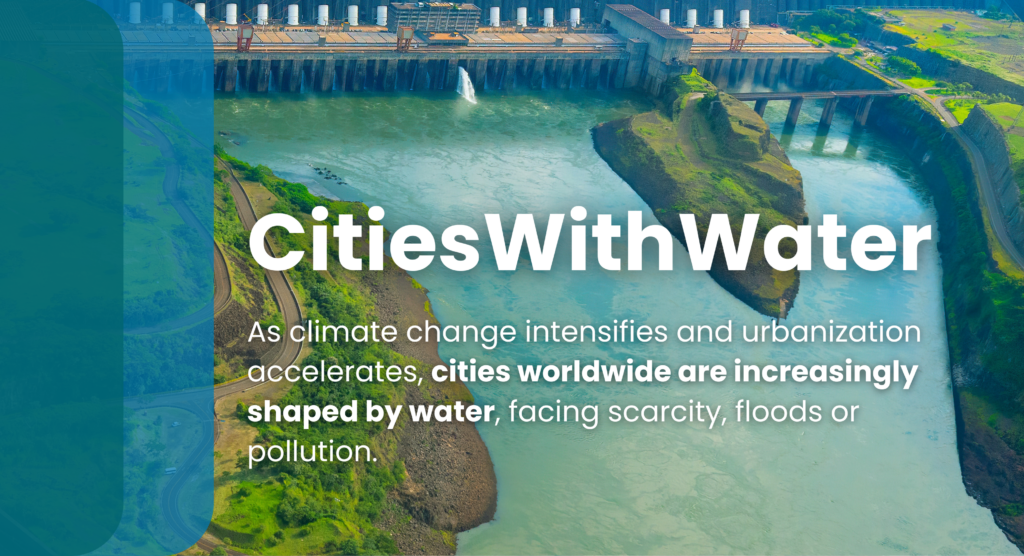
The CitiesWithWater initiative has placed water firmly on the urban sustainability agenda. Through a webinar series and an international photography competition, CitiesWithWater is raising the voice of cities and learning how they can and should act now to safeguard water systems, human well-being and ecosystems.

 
As climate change intensifies and urbanisation accelerates, cities around the world are increasingly defined by water. In some cases they have too little, sometimes too much, or sometimes water that’s too dirty.

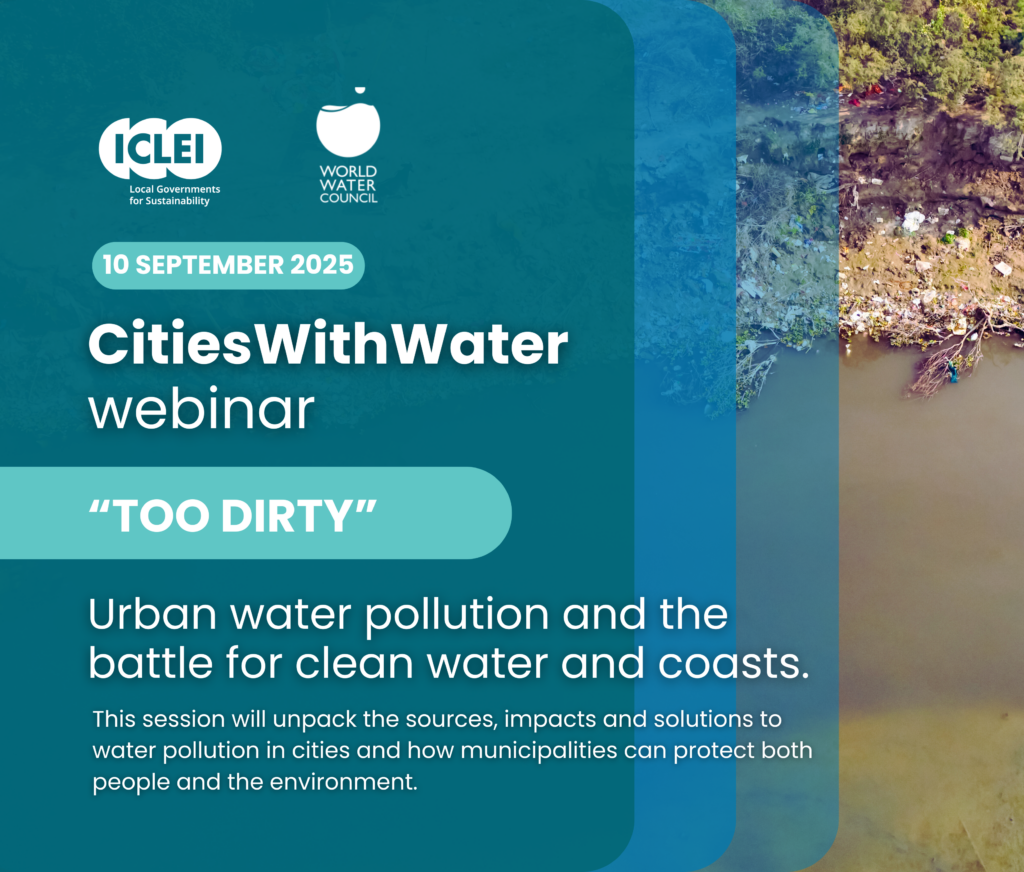
In the recent webinar titled Too Much, hosted in collaboration with the World Water Council, city leaders and technical experts explored how urban areas are preparing for or recovering from floods, storms, sea-level rise and the cascading impacts of climate change. This second installment in the CitiesWithWater series followed the success of the first (“Too Little”) and sets the stage for the upcoming webinar, “Too Dirty”, which will delve into water pollution and the urgent need to protect downstream ecosystems and coastal waters.

Lessons from the frontlines of flood resilience

The “Too Much” webinar (18 June 2025) highlighted that flood-related disasters have increased by 134% since 2000 (WMO, 2021), a statistic that no city can afford to ignore. Panellists from cities including Kumamoto (Japan), Lusaka (Zambia), Ningbo (China), and Larissa (Greece) shared powerful case studies on how their municipalities are adapting to flood risks.

  • Kumamoto has invested in nature-based solutions such as forest conservation and paddy field water storage, alongside digital tools like VR training to prepare citizens for evacuation.


  • Lusaka, where 70% of residents live in informal settlements, is tackling both flood risk and disease outbreaks (e.g., cholera) through community-based infrastructure projects, water point upgrades and employment programmes to clean and unblock drains.


  • Ningbo has built a seven-pronged urban water strategy, including intelligent monitoring and rain gardens, to successfully weather major typhoons with minimal impact.


  • Larissa, still recovering from Storm Daniel in 2023, highlighted how fragmented governance and lack of infrastructure left the city vulnerable and why resilient planning and institutional cooperation are essential.
These stories reinforce a key takeaway: there is no single stand-alone solution. Urban water resilience requires multi-layered, collaborative and forward-looking solutions, blending engineered infrastructure with ecosystem restoration and active community engagement.

From catchment to coast: The broader picture

What happens upstream doesn’t stay upstream. With the UN Ocean Conference (UNOC) recently reaffirming the vital links between terrestrial and marine systems, CitiesWithWater is also working to bridge the gap between urban water governance and coastal health. Dirty or excessive water from cities — be it stormwater, untreated sewage, or plastic waste — flows downstream, posing major threats to fragile estuaries, coral reefs and fisheries.

In the upcoming “Too Dirty” webinar, these linkages will be explored more deeply. How can cities protect downstream ecosystems from pollution while safeguarding human health and livelihoods? What does it take to reduce nutrient runoff, manage industrial discharge and treat wastewater effectively in dense urban settings?

According to UNEP, 80% of marine pollution comes from land-based sources, much of it through poorly managed urban water systems. Without effective urban catchment management, the oceans will continue to bear the brunt of our inaction.

Wetlands in the city: Nature’s green infrastructure

With the Convention on Wetlands COP15 fast approaching in July 2025 in Victoria Falls, Zimbabwe, CitiesWithWater is also drawing attention to the vital role of urban wetlands. These ecosystems, often overlooked in city planning, act as natural sponges that absorb floodwaters, filter pollutants and recharge aquifers.

Wetlands also serve as critical habitat for biodiversity, cooling spaces for urban residents and buffers against sea-level rise and coastal storms. Yet urban expansion continues to degrade or destroy them. Between 1970 and 2015, 35% of the world’s wetlands were lost (Ramsar Global Wetland Outlook, 2018), and many that remain are under pressure from pollution, encroachment and climate change.

Cities that invest in wetland protection and restoration — like Cape Town’s rehabilitation of the Zandvlei Estuary or Kolkata’s use of its East Kolkata Wetlands for natural sewage treatment — are leading the way in reintegrating nature into urban water systems.

As cities prepare for the Wetlands COP, this is the moment to embed wetlands into climate adaptation strategies and urban planning frameworks. The cost of inaction is rising fast in terms of infrastructure damage and ecological collapse.

Why urban water systems matter and why they’re at risk

Urban water systems are not just pipes and pumps. They are the veins and arteries of a living city to sustain health, enable growth and connect communities. Yet they are under serious threat:

The challenges are multiple and formidable, but the opportunity is commensurately large. With the right investment, policy coherence and public engagement, urban water systems can be pathways of resilience. Well-managed urban water systems can cool cities, protect coasts and support biodiversity, not only within urban areas but also for the surrounding catchment on which they are dependent.
From risk to resilience Water — too much, too little, or too dirty — is no longer a peripheral issue. It is central to the survival and success of cities in the 21st century and forms the blue thread through the three Rio Conventions on climate change, biodiversity and desertification and land degradation. CitiesWithWater is helping bring that message to life by hearing directly from city officials how they are rising to the challenge and turning threats into opportunities.


MEDIA RELEASE

ICLEI, together with its partners, invites subnational and local governments to Montréal, Québec, Canada for the 7th Summit for Subnational Governments and Cities and its associated Pavilion. The Summit, an official parallel event to the 15th Conference of the Parties (COP 15) to the CBD, will be co-hosted with the Secretariat of the Convention on Biological Diversity (SCBD) and Regions4, along with the host Government of Québec and the City of Montréal. Both the Summit and the Pavilion are financially supported by the Government of Québec as main sponsor.

For the first time at a CBD COP, there will be a dedicated Pavilion, focusing on subnational government and city actions and opportunities. This clearly demonstrates an elevated recognition and the biodiversity community of the significant contributions of local and subnational governments towards the implementation of the global biodiversity framework (GBF).

Image provided by: Ezjay/Shutterstock.com

"It is with great pride that we welcome you to Québec for the 15th Conference of the Parties on Biological Diversity. Through its role as coordinator of the Advisory Committee on Subnational Governments and Biodiversity together with Regions4, Québec is committed to doing everything possible to promote the adoption of an ambitious Global Biodiversity Framework which, we hope, will pave the way for a new era of collaboration. We invite subnational you to participate in large numbers in the 7th Summit for Subnational Governments and Cities and to make your voice heard at this historic meeting."

The Summit and Pavilion constitute an unprecedented global milestone to welcome significantly strengthened contributions from subnational governments and cities to the new post-2020 GBF. The Summit, focused on taking action for biodiversity, will be held on 11th and 12th December 2022 at the Palais des Congrès (blue zone) and will center around three elements: Engage, Influence and Act.

The Pavilion program will include multiple events, from 8th to 18th December, during COP 15.

“Cities are essential leaders in the fight against climate change, the protection of biodiversity and the adaptability of our territories. They already experience the impact of environmental issues, they understand the major challenges that lie ahead, as well as the solutions to be implemented. As the mayor of Montréal and ICLEI global ambassador for local biodiversity, I am very happy to welcome the 7th Summit for Subnational Governments & Cities: Taking Action for Biodiversity.”

This 7th Summit will provide a unique opportunity to address the targets and actions of the new GBF such as reducing threats to biodiversity, meeting people’s needs through sustainable use and benefit-sharing of biodiversity and ecosystem services, as well as implementing local and regional tools and solutions. The Summit is dedicated to taking action and making commitments, with subnational governments and cities sharing and demonstrating inspirational biodiversity initiatives, solutions and achievements, and pivoting combined multi-level ambitions and engagement into measurable actions. The outcome of this historic, action-oriented Summit will be presented formally by the hosts to the CBD COP 15 High Level Segment as a united message from the subnational constituency.

“As we approach COP 15 in Montréal this December, I am encouraged by the decision-makers of such authorities who are transforming the ways in which our economies affect biodiversity and move us towards whole-of-government, whole-of-society, approaches to ensure a sustainable future."

The Summit will announce, solidify and celebrate subnational and local actions for the protection, restoration and enhancement of biodiversity across the world, actions that reconnect communities with nature for a more sustainable future. It will present new projects and multilateral announcements, and profile initiatives such as the global CitiesWithNature and RegionsWithNature partnership, which provide a platform for local and subnational governments to commit and share their ambitious actions and initiatives for and with nature, in measurable ways.

“Our planet can no longer support the inefficient misuse and management of our natural resources. The loss of biodiversity across the globe is inextricably linked to the acceleration of the climate crisis and the nature-based systems we rely on to help sustain our communities and way of life. Local governments will no longer tolerate being forced to confront this climate emergency alone. We should join CitiesWithNature and RegionsWithNature to convene and share our actions across all levels of government. And we should show the leadership needed in this now-or-never moment to safeguard a biodiverse, 1.5-degree world where all life can thrive. Together, we welcome a strong framework coming out of the UN Biodiversity COP15 conference to give us the momentum and guidance to act.”

The 7th Global Summit is convened by ICLEI, and co-hosted with the Secretariat of the Convention on Biological Diversity (SCBD) and Regions4, along with the host Government of Québec and the City of Montréal.  This milestone Summit and Pavilion are supported by the Government of Québec, as main sponsor, and will welcome Parties, subnational governments, cities, their leaders, networks and partners from across the world to contribute and actively participate – in person or virtually.

COP 15 is hosted by the Government of China, and as the province of Yunnan, Kunming City, and China Environment News, in coordination with ICLEI East Asia Secretariat and the Ministry of Ecology and Environment of China, have contributed to the COP since its first phase, their role is acknowledged as supporting institutions to the 7th Summit.

Summit registrations are open at cbc.iclei.org or email biodiversity@iclei.org for more information.

Images provided by: Ville de Montréal

RegionsWithNature is proud to announce the launch of our brand new website!

The RegionsWithNature website officially launched in July, to coincide with our first ever RegionsWithNature webinar

This website is a significant milestone in the RegionsWithNature journey and shows the upwards trajectory of our growth as an initiative.

Building on the success of our parallel initiative CitiesWithNature, RegionsWithNature was launched at ICLEI’s Daring Cities forum in October 2021, to provide a similar dynamic online space for regional governments and their partners to connect, demonstrate their commitment to biodiversity goals, and access resources to enhance their landscape and territorial actions for nature. Regional governments are best positioned to work at the larger scale of landscapes and to implement solutions that span from urban to rural areas, for example, to achieve resilient water catchments and sustainable food systems. 

This regional approach is also emphasized by the view of the IPBES Global Assessment Report on Biodiversity and Ecosystem Services that successful transformations towards sustainability require governance approaches that are integrative, inclusive, informed and adaptive. To this end, RegionsWithNature will serve regional governments from around the world, such as provinces, states, prefectures and larger territories to promote nature-positive development at the landscape scale and across urban-rural linkages. 

RegionsWithNature is recognized by the UN Convention on Biological Diversity (CBD) as the platform to report on and track progress of the commitments from subnational governments that contribute to the implementation of the post-2020 global biodiversity framework.

On the RegionsWithNature action platform, that will be developed on the site, subnational governments are able to report how they deal with, for example, a water crisis, extreme weather events, food security by working with, and restoring nature and biodiversity in diverse urban and rural landscapes during this very important UN Decade on Ecosystem Restoration.

As a partnership initiative, we’ve managed to grow with the support from our partners and regions.

“We need to act now, and we need to act together. We know that cities and regions of all shapes and sizes around the world are already pioneering solutions and implementing transformative projects with, and for, nature. These subnational governments are ahead in connecting the climate and nature crises, food security, health and wellbeing. ICLEI, together with our many partners, is delighted to bring a shared implementation platform to all these levels of subnational governments - states, regions, provinces and prefectures - to inspire each other with new ambition, commit their localized aspirations and capture their actions for others to learn from.” “With bold, actionable and implementable steps, together our cities and regions are perfectly placed to bring the change humanity needs right now to restore its relationship with nature. Both CitiesWithnature and now RegionsWithNature are there to support and serve them every step of the way.”

“RegionsWithNature is a necessary platform demonstrating the effectiveness of multilevel governance, and we need to scale up finance for territorial action. Its contributors are the pilots – the leaders for enabling subnational governments to manage territory beyond municipal borders. Collaboration is the key.”

“[The Yucatan Governor, Mauricio Vila] is the champion of RegionsWithNature. Through RegionsWithNature we motivate and share experiences to raise ambition for subnational governments to be at the forefront for biodiversity to make the difference.”

“The RegionsWithNature platform is made by you and it is for you, to get to the CBD COP and put solutions into practice.” Regions4 is developing a case study database – which will be hosted on the RegionsWithNature website – to use as “a tool to breach the gap between knowledge, reporting, science and implementation for subnational governments to translate and scale up actions on the ground.”

Current RegionsWithNature members:

  • The Government of Yucatan
  • The Aichi Prefecture
  • The Lombardy Region
  • The Government of Quebec
  • The Government of Scotland
  • The Government of São Paulo
  • The Government of Pernambuco
  • Goa State
  • The Western Cape Province
  • Community of Madrid
  • The Government of Catalonia

The UN Ocean Conference, co-hosted by the Governments of Kenya and Portugal, took place between 27 June and 1 July 2022 in Lisbon, Portugal, and culminated in delegates adopting a political declaration titled ‘Our Ocean, Our Future, Our Responsibility’. 

The conference brought together national and local governments, UN agencies, and multiple stakeholders across different sectors to explore and identify solutions aimed at finding major structural transformations and common shared solutions, to be anchored in the SDGs. 

Under the theme ‘Scaling up ocean action based on science and innovation for the implementation of Goal 14: stocktaking, partnerships and solutions’, discussions focused on leveraging interlinkages between Sustainable Development Goal 14 (SDG 14 – Conserve and sustainably use the oceans, seas and marine resources for sustainable development) and other SDGs towards the implementation of the 2030 Agenda for Sustainable Development. Throughout the conference, the linkages between SDG 14 and goals related to clean water and sanitation, poverty, food security, health, women, decent work, climate action, cities, terrestrial ecosystems, and partnerships were emphasized.

Jessie Turner, Director of the International Alliance to Combat Ocean Acidification (OA Alliance) captured the importance of urgent action for oceans: “When talking about climate change impacts on our ocean, we must be clear that while we don’t know everything, we know enough to act. We know enough to begin prioritizing and exploring the key questions that are most important to policy makers, seafood industries and coastal communities. And the good news is…we have lots of existing frameworks across different scales of governance that can be leveraged to take up this work.”

ICLEI – Local Governments for Sustainability and ICLEI’s Cities Biodiversity Center was represented by Kate Strachan – Manager, Climate Change Resilience, ICLEI Africa, and Stefania Romano – Global Coordinator for CitiesWithNature and RegionsWithNature, Recruitment and Advocacy.

During an interactive dialogue titled ‘Leveraging interlinkages between Sustainable Development Goal 14 and other Goals towards the implementation of the 2030 Agenda’, ICLEI emphasized the need for cities to learn from one another and apply these lessons and practices to protect, manage and restore vulnerable urban coastal ecosystems. To achieve this, CitiesWithNature and RegionsWithNature are international partnership initiatives providing a platform to connect local and subnational governments globally with NGOs, experts and communities to act for nature.

By 2025, nearly 6 billion people will live within 200 km of a coastline. Population growth and climate change-related impacts are increasing coastal risks and degrading coastal ecosystems upon which millions depend. Climate change impacts also compound existing pressures, such as pollution from land-based sources, ocean acidification and overfishing. Coastal cities and regions have unique opportunities to mobilize and demonstrate leadership in taking action to protect our ocean and ensure that the ocean and its accompanying coast are sustainably managed.

“It has never been as urgent as it is today to restore damaged ecosystems,” Stefania said. “SDG 14 offers a great opportunity to advance ocean sustainability globally and address current and emerging threats.” The goal is underpinned by targets addressing the conservation and sustainable use of the ocean, seas and marine resources – including coastal zones – and capacity building for ocean governance. In addition, SDG 14 supports the achievement of SDGs related to poverty alleviation, food security, sustainable blue/ocean economy, and climate change. 

ICLEI was involved in a number of sessions and played a role in bringing to the forefront the role of subnational governments in ocean governance. As evident during the conference, both national and subnational governments are leading the way, taking domestic and international actions that expand climate-ocean policy and financing for this work.

Organizations and partnership initiatives such as ICLEI, CitiesWithNature and RegionsWithNature can facilitate learning from coastal city leaders, while simultaneously seeking deeper integration across climate, ocean and biodiversity commitments. These efforts will advance actions that address climate change, support food security and sovereignty, and increase resilience of marine ecosystems, economies, and communities.  

Despite the delays in pivotal ocean and climate convenings and benchmarks as a result of Covid-19 restrictions, the UN Oceans conference sparked momentum once again, through the notable outcome of the 2022 UN Oceans Conference – the ‘Our Ocean, Our Future, Our Responsibility’ declaration. 

Matosinhos side-event

Prior to the official Conference, a Special Event on ‘Localizing Ocean Action’ was held in Matosinhos (Porto) on 25 of July, convened by the co-hosts of the 2022 UN Ocean Conference, together with the City of Matosinhos, and organized in collaboration with UN DESA, UN Global Compact, the Climate Champions Team, the Global Taskforce of Local and Regional Governments, ICLEI, Regions4 Sustainable Development, Ocean & Climate Platform (OCP), United Cities and Local Governments (UCLG), Resilient Cities Network, the International Association of Cities & Ports (AIVP) and OECD. The special session highlighted urban-ocean linkages, specifically around marine plastic pollution, blue finance, local community development, human rights-based approaches towards transformation, and SDG 14 and the Post-2020 Global Biodiversity Framework. The special event also covered the role of local and regional governments to engage in global efforts and decisions to protect the ocean and maritime resources. The outcomes from the special event were conveyed during the main UN Ocean Conference.  

ICLEI and the OCP co-organized Local Ocean Action Session 1, titled ‘The clock is ticking: How can coastal cities build resilience and incorporate nature-based solutions to protect local populations?’ This session focused on the importance of investing in innovative sustainable solutions, particularly nature-based ones, to combat the impacts of climate change, such as flooding, coastal erosion and rising sea levels. Speakers were invited to share innovative practices implemented by cities and regions. The panel was moderated by Kate Strachan, while Stefania Romano presented CitiesWithNature and RegionsWithNature as the Convention on Biological Diversity-recognized international partnership initiatives providing a platform and connecting local and subnational governments acting for nature. The side-event resulted in the Municipality of Matosinhos joining CitiesWithNature.

Session key messages included

  • Coastal territories adaptation has to be considered at a larger territorial scale. From megalopolis to secondary cities and small towns, the more vulnerable urban areas have to collaborate at the regional scale to better design sustainable coastal adaptation strategies. It is crucial to reinforce cooperation at every level and encourage a “whole-of-society” approach.
  • Climate coastal adaptation is changing towards a new sustainable paradigm. There is no one-fit-all solution. Managed retreat, nature-based solutions, hard and soft coastal protection, technical innovations, early warning systems, raising awareness, and education are all relevant responses that have to be combined, considering the local context. 
  • Key coastal stakeholders all have to be engaged in the global coastal transition for a sustainable blue economy, a well-adapted coastline and an equitable future. Local decision makers, populations, civil society, ports, tourism sector and privates should all be part of a co-construction process. 
  • Coastal adaptation and resilience has to include societal issues. Many communities have a difficult time securing funds and techniques for equitable coastal resilience. Targeting youth and women in terms of livelihood, coastal adaptation might be an opportunity to reduce poverty and social inequalities.

ICLEI in collaboration with Regions4, the Government of Catalonia, UCLG, and the Global Taskforce of Local and Regional Governments co-organized session 3: ‘Strengthening Cooperation, Building Innovative Governance Approaches to protect the ocean. Finding solutions to the complex and multi-dimensional sustainability challenges faced by coastal areas, which are aggravated by climate change, requires an inclusive and innovative governance approach. Building on the previous sessions that focused on impacts and finance, this session focused on governance as a core condition for the implementation of SDG14. 

Session key messages included

  • Local and regional governments have been leading in developing effective solutions through local public service provision, partnerships and initiatives that include and support fishers, and local populations and their know-how and experience must be harnessed to protect our oceans.
  • Co-management approaches among different spheres of government and actors trigger a culture of collaboration and trust thus enabling an ecosystem-based management. These approaches can in turn permeate to other sectors.
  • The achievement of sustainable small-scale fisheries calls for inclusive and participatory governance arrangements, at all levels. This entails meaningful participation, taking into account and addressing existing power imbalances, strengthening stakeholder organizations, such as small-scale fisheries organizations and supporting dialogue and peer learning.
  • Close collaboration among actors must be backed by scientifically recognized data, all facilitated by impartial elements that ensure accountability and transparent, informed and fair processes.
  • The capacity of local and regional governments in building sustainable management models needs to be strengthened. Particularly, the capacity of SIDS and their cities and regions to respond to global challenges in light of increased ocean and sea degradation.
  • Local and regional governments are willing to join the decision-making table on biodiversity and ecosystem conservation, convening a powerful voice one the global agendas, while promoting opportunities for peer-learning, exchange of experiences and scale-up of effective practices.

Parties to the UN Convention on Biological Diversity (CBD) advanced a global plan at the fourth Open Ended Working Group (OEWG-4) meeting in Nairobi, Kenya from 21-26 June to bend the curve on biodiversity loss. This Global Biodiversity Framework (GBF) is expected to be adopted at the CBD COP 15 in Montreal, Canada – under the Chinese presidency – in December 2022. 

The CBD is the only Rio Convention that has a systematic and comprehensive mechanism for multilevel governance that provides a framework for local and subnational governments to support Parties in reaching global and national biodiversity targets.

What was achieved at OEWG-4

Delegates worked on the text from the OEWG-3 meetings in Geneva in March, and rationalized parts of it, achieved consensus on several targets, and proposed diverse options for large parts of the framework. Parties set out their ambitions with respect to the goals of the framework, and refined the essential targets related to conservation, sustainable use, and benefit-sharing. They worked to develop a plan for resource mobilization and other means of implementation and highlighted the contribution of nature to climate change mitigation and adaptation.

Parties also charted the pathway for an agreement on the sharing of benefits from Digital Sequencing Information on genetic resources. Their discussions further strengthened the role of Indigenous peoples, local communities, women, youth, and other stakeholders and to ensure that all voices will be heard, and no one will be left behind. 

Although discussions covered the entire framework text – which includes four goals and 23 proposed targets – four important goals of the framework (A through D) were a subject of intense discussion: 

Goal A – protecting biodiversity at all levels and preventing extinctions; 

Goal B – ensuring that biodiversity can meet people’s needs and support their human rights;

Goal C – benefits from the use of biodiversity and genetic resources are shared with equity and the traditional knowledge and rights of Indigenous and Local Communities are respected; and 

Goal D – adequate level of the means of implementation are enabled, including financial resources, capacity building and other supports to action.

I want to thank the Parties for their hard work, their commitment to consensus, and honest engagement in these negotiations. These efforts are considerable and have produced a text that, with additional work, will be the basis for reaching the 2050 vision of the Convention: a life in harmony with nature. I call upon the Parties, in the next months, to vigorously engage with the text, to listen to each other and seek consensus, and to prepare the final text for adoption at COP 15.

The Local and Subnational Major Group

The Local and Subnational Major Group was represented in-person by ICLEI with Ingrid Coetzee heading the delegation, and the Advisory Committee on Subnational Governments for Biodiversity, represented by a delegation from Quebec Province comprising Assistant Deputy Minister Jacob, Martin Malus – head of the delegation – Jean Lemire, and Rachel Levesque. Similar to previous CBD post-2020 meetings, ICLEI coordinated the delegation.

While there are still important elements that require additional work and consultation with the capital to further streamline texts, the Nairobi negotiations represented a good outcome for the local and subnational major group. These outcomes include:

  • similar to previous meetings, the meeting was marked by an increase in Parties (Nepal, Iran and the Philippines) calling for the inclusion of local and subnational governments in the GBF;
  • some Parties commended the Local and Subnational Major Group on how well coordinated and strategic their interventions were;
  • the Local and Subnational Major Group was given the opportunity to make two interventions in the contact groups – both interventions for text amendments to section B.bis (on [Principles and] [Approaches] [Guidance] for the implementation of the Framework) were supported by the Parties. References to local and subnational governments are also found in section B. Purpose, section D. Theory of Change, and section 1. Enabling Conditions; and
  • the group was invited to deliver joint statements in the opening and closing plenaries.

Local and subnational governments at COP 15 and 7th Cities Summit

Despite the important contributions of OEWG-4, a considerable amount of work will be required to advance the text for final high-level consideration by the Parties at COP 15. The OEWG-4 Meeting agreed to develop a path forward that includes the engagement of all regions preparing for talks involving all Parties immediately before the second part COP 15. These gatherings – culminating in OEWG-5 – would prepare a text for final negotiation by Ministers and their delegations at the second part of COP 15.

The relocation and new date for COP 15 Part 2 was announced during the opening plenary, following consultations between the Bureau, the Government of China as COP President, the Secretariat and the Government of Canada as host of the Secretariat. COP 15 Part 2 will be held in Montreal, Canada at the seat of the Secretariat, from 5 to 17 December 2022. China, as COP 15 President, will continue to preside over the Meetings, with the logo and the theme of COP 15 maintained. China will also convene the High-Level Segment and lead the facilitation of negotiations. 

COP 15 and the 7th Global Biodiversity Summit of Cities and Subnational Governments will be a global milestone to welcome a stronger contribution of local and subnational governments in the post-2020 GBF. It will be a strategic and historic moment for the local and subnational major group, which is calling for CBD Parties to adopt a renewed decision on engagement with subnational governments, cities and other local authorities to enhance implementation of the post-2020 GBF, and its Plan of Action on Subnational Governments, Cities and Other Local Authorities for Biodiversity (2021-2030). No information or decision has been communicated around the status of official parallel events, including the 7th Cities Summit, but announcements will follow shortly based on discussions between the SCBD and the Canadian government.

On 13 July 2022, RegionsWithNature hosted its first webinar to gather inputs from subnational governments around the world to develop and refine the platform in alignment with their needs. The webinar also offered an opportunity for the governments of Scotland, Quebec and Yucatan to showcase their policies and actions for nature, particularly on ecological infrastructure, biodiversity management and restoration. 

The enthusiasm among regional governments and partners was evident in their endorsements of the platform. Most notably, the Secretariat of the Convention on Biological Diversity (SCBD) reaffirmed its official support to RegionsWithNature, as a groundbreaking initiative that has matured into a one-stop shop for capacity building for the next 10 years to create an implementation mechanism for actions for nature. 

We warmly welcome GoLS and the Aichi Prefecture joining RegionsWithNature and recognize Governor Ohmura’s leadership in building a lasting legacy from the landmark COP10 in Nagoya in 2010 and creating ecological networks for taking effective and urgent actions to halt the loss of biodiversity.

Our ICLEI office in Japan, through Executive Director, Togo Uchida, is ready to continue advising GoLS on their journey in RegionsWithNature, as we share the mission, scope and objectives in restoring our natural environment for a systemic transformation to more sustainable, inclusive and green societies.


Oliver Hillel, SCBD Programme Officer, stated that “RegionsWithNature is a necessary platform demonstrating the effectiveness of multilevel governance, and we need to scale up finance for territorial action. Its contributors are the pilots – the leaders for enabling subnational governments to manage territory beyond municipal borders. Collaboration is the key.”

Sayda Rodriguez, Secretary of Urban Development and Environment of Mexico’s State of Yucatan, noted that the Yucatan Governor, Mauricio Vila, “is the champion of RegionsWithNature.” She added that “through RegionsWithNature we motivate and share experiences to raise ambition for subnational governments to be at the forefront for biodiversity to make the difference.”

RegionsWithNature has been working closely with its partner Regions4 Sustainable Development. Renata Gomez, Regions4’s Biodiversity Programme Manager, explained to other partners and governments that “the RegionsWithNature platform is made by you and it is for you, to get to the CBD COP and put solutions into practice.” She highlighted that the case study database Regions4 is developing – which will be hosted on the RegionsWithNature website – can be used as “a tool to breach the gap between knowledge, reporting, science and implementation for subnational governments to translate and scale up actions on the ground.”

During the webinar, the governments of Catalonia and Quebec both emphasized the importance of RegionsWithNature in progressing the post-2020 Global Biodiversity Framework goals – particularly by providing a voice for regional governments and serving as an instrument for taking action for nature. Similarly, the Aichi Prefecture expressed their support for RegionsWithNature to play a role in building on the 2010 Plan of Action, as well as the Aichi Biodiversity Targets. Finally, the Region of Lombardy expressed their interest in joining RegionsWithNature, and also announced that they are already a signatory to the Edinburgh Declaration.

A call for action ahead of COP 15: 

UN Biodiversity’s COP15 and the 7th Global Biodiversity Summit of Cities and Subnational Governments provides an opportunity to mobilize more subnational leaders and governments to sign up to RegionsWithNature. Simultaneously, it is crucial for subnational governments to show their commitment and scale it up when it comes to implementation for RegionsWithNature to become an implementation mechanism for actions for nature.

“We cannot wait for actions, we know that cities and regions, of all shapes and sizes around the world – like-minded – are pioneering solutions and are ahead in connecting the climate and nature crisis, health and the pandemic, connecting the dots for what a sustainable future is, for all of us,” Kobie Brand,  Deputy Secretary General of ICLEI – Local Governments for Sustainability said.

She added that “we need the same platform, for the different levels of subnational governments – taking hands with states, regions, and prefectures that join to learn, inspire each other, commit their actions, and report how they deal with for example water crises, and land management crises, as well as with the urban-rural linkage when it comes to food security, restoring nature and biodiversity in this very important UN Decade on Restoration.”

Following this statement, Kobie expressed a call for action for each regional government or partner to recruit at least one region to join RegionsWithNature and make voluntary commitments to take action for biodiversity before COP15.

For more information on the nature policies by regional governments, visit the RegionsWithNature Tools & Resources page

Stefania Romano’s – CitiesWithNature and RegionsWithNature Global Coordinator responsible for Recruitment & Advocacy – presentation is here and the recording of the webinar can be found here. Below the presentations of Carolina Duarte (Yucatan), Peter Hutchinson (Scotland), and Caroline Daguet (Quebec), are available.

2022-07-13_PPT_Quebec_for_RegionsWithNature_v1

Regions with Nature – 13 July 2022 – Peter Hutchinson, NatureScot Peatland Action (A3778000)

ENG ESTRATEGIA RECUPERACIÓN Y CONSERVACIÓN DE ECOSISTEMAS ENG

The prestigious, well-established and respected Group of Leading Subnational Governments toward Aichi Biodiversity Targets (GoLS) and the Aichi Prefecture have joined the global RegionsWithNature partnership initiative.

GoLS and its members, that include the Aichi Prefecture, ANAAE, Campeche, Catalonia, Gangwon, Jiangsu, Ontario, Quebec and São Paulo, have stood firmly on matters related to subnational and regional governments’ collective action. Subnational governments, including States, Provinces, Regions, and Prefectures, are key in implementing actions and achieving results for the conservation and the sustainable use of biodiversity, and their active contributions are essential to achieving the Aichi Biodiversity Targets.

The Aichi Prefecture has been the key subnational government in implementing the Aichi Targets since their adoption at the 2010 biodiversity CBD COP10, held in Nagoya, the capital city of the Aichi Prefecture. It is at this COP that, for the first time, CBD Parties endorsed and adopted the Plan of Action on how to mobilize subnational and local governments to bring national strategies and plans addressing global biodiversity issues into a local context.

The Aichi Prefecture has taken important action in pursuing the local and subnational agenda and creating communities that support rich and abundant biodiversity, for humans and nature to live in harmony.

The Aichi Prefecture has joined RegionsWithNature as a founder under the leadership of Governor Ohmura and has shown its determination to be actively involved, together with ICLEI, in promoting nature conservation activities in municipalities around the world. Aichi Prefecture is a metropolitan area with a thriving manufacturing industry, but also a region rich in nature, with forests, rivers and a long coastline. Aichi Prefecture is committed to working with other local and subnational governments and other actors participating in RegionsWithNature in order to implement effective measures to harmonize the environment and the economy.

Today, as global sustainability is becoming an ever more pressing issue, and as local government involvement is seen as a pivotal condition for fair and just transition on the ground, Parties are reaffirming the importance of involving local and subnational governments in the global suitability agenda including in the context of climate crisis.

This is our time to make a significant contribution and make a concrete and substantial difference. National governments should embrace multilevel cooperation and local and subnational governments need to scale up actions.

Fortunately, frameworks for international action are in place and we can step up our efforts through and with RegionsWithNature to achieve our common goals. ICLEI Japan will work together with GoLS and the Aichi Prefecture in addressing the underlying causes of biodiversity loss by mainstreaming biodiversity across all levels of governments in Japan and elsewhere around the globe.

The Convention on Biological Diversity was fortunate to have the local and subnational governments across the globe advancing and accumulating experience based on the Plan of Action in 2010. But further actions are needed.

With GoLS joining RegionsWithNature as a partner, we add an important ally to strategically move ahead, together with the other founding partners, ICLEI, Regions4, the European Committee of the Regions, the IUCN and global bodies like the UN Environment Programme and the Secretariat of the UN Convention on Biological Diversity.

The Aichi Prefectural Government in Japan comes in as well, along with the founding subnational governments, namely Yucatán and Campeche in Mexico, São Paulo and Pernambuco in Brazil, Goa in India, the Community of Madrid in Spain, the Western Cape Province in South Africa, Québec in Canada.

We warmly welcome GoLS and the Aichi Prefecture joining RegionsWithNature and recognize Governor Ohmura’s leadership in building a lasting legacy from the landmark COP10 in Nagoya in 2010 and creating ecological networks for taking effective and urgent actions to halt the loss of biodiversity.

Our ICLEI office in Japan, through Executive Director, Togo Uchida, is ready to continue advising GoLS on their journey in RegionsWithNature, as we share the mission, scope and objectives in restoring our natural environment for a systemic transformation to more sustainable, inclusive and green societies.

Amidst environmental challenges of unprecedented scale and urgency there is reason for hope, as we come together, strengthening tools, resources, and decisive action for shifting to a sustainable future. Local and subnational governments are looking forward to the adoption of an updated, strengthened and more ambitious Plan of Action on engagement of subnational governments, cities and other local authorities to enhance the implementation of the post-2020 Global Biodiversity Framework (GBF), at the Biodiversity COP 15 in Kunming, China later this year. This will put local and subnational governments on a trajectory to optimize their contributions to achieving global and national biodiversity targets and the vision of living in harmony with nature.

CitiesWithNature/RegionsWithNature warmly welcomes its newest member to the family, the European Committee of the Regions!

ICLEI, one of the founding members of the CitiesWithNature/RegionsWithNature platform, has been working in close collaboration with the EU CoR for a long time. ICLEI Europe particularly, has played the strong role of supporting the EU CoR in delivering opinions on Biodiversity in relation to the Post 2020 GBF. There have been multiple arenas where ICLEI Europe and EU CoR have joined forces and one prominent example is the Edinburgh Declaration, where EU CoR participates in regular strategic meetings to further the progress on the commitments from the various signatories to the Edinburgh Declaration. 

Building on this strong foundation, ICLEI invited the Committee of the Regions to become a partner to the RegionsWithNature platform. RegionsWithNature aims to strengthen the voice of the regional authorities in the scope of biodiversity and nature-based solutions and make it heard at the national and international levels. By joining RegionsWithNature, CoR unites with ICLEI, Regions4, the Group of Leading Subnational Governments (GoLS), IUCN and other international organizations. RegionsWithNature is also supported by the UN Environment Programme and the Secretariat of the UN Convention on Biological Diversity, with numerous regional and subnational governments already on board, including Yucatán and Campeche in Mexico, São Paulo and Pernambuco in Brazil, Goa in India, the Community of Madrid and Catalonia in Spain, the Western Cape Province in South Africa, Québec in Canada and Scotland in the UK.

We are honored to welcome the European Committee of the Regions (CoR) into the RegionsWithNature initiative and platform, under our shared missions of connecting urban planning and biodiversity conservation.

Now that there is already a growing momentum towards addressing the climate emergency with the biodiversity crisis in close conjunction, we are delighted to welcome the voice of the European regions through the Committee of the Regions to the RegionsWithNature family.

We are certain that in the context of RegionsWithNature, where there are prominent advocates of strong commitments and pro-active contributions towards more biodiversity in cities and regions such as ICLEI, Regions4, GoLs and IUCN, this partnership will bear fruitful outcomes and greater impacts for the benefit of human and nature."

While CoR is the voice of regions and cities in the European Union (EU), RegionswithNature brings together regional and subnational leaders and their partners from around the world, providing access to tools and resources on nature-based solutions, ecosystem restoration, and biodiversity conservation, and sharing regional commitments to achieving global nature goals.

Local and sub-national governments are at the forefront of implementing measures to tackle biodiversity loss and ecosystem degradation.

This is why the European Committee of the Regions, as the European Union's assembly of regional and local representatives, strongly supports the objectives of RegionsWithNature. This global platform is an essential tool to showcase regional commitments towards achieving national and global biodiversity targets, with the aim of bolstering regional governments' nature ambitions and ensuring that multi-level governance opportunities for action are maximised.

The path ahead, to meet the demands of the biodiversity agenda specifically the Post-2020 Global Biodiversity Framework, is ambitious and demanding. Promising outcomes for Europe and the world in halting biodiversity loss and restoring ecosystems on a large scale requires inclusive partnerships built upon shared principles and values for implementing concerted and successful actions. Thus, with EU CoR committing to take an active role in the global biodiversity arena by joining RegionsWithNature, we are certain that we are on the right track with collective strong ambitions to make a positive change.

Kunming, China, has become the 244th signatory to the Edinburgh Declaration, a statement of intent that has been agreed between subnational and local governments across the world and calls on Parties to the Convention on Biological Diversity (CBD) to take bold action to halt biodiversity loss.

The Scottish Government, with support from a wide range of partner organizations, proudly hosted the Edinburgh Process for Subnational and Local Governments on the Development of the Post-2020 Global Biodiversity Framework, which began towards the end of April 2020.

The Edinburgh Process brought together delegates from across the world representing all levels of governments, including strong representation from subnational and local governments, as well as indigenous people and local communities, women, youth, NGOs and the business community.

The Edinburgh Declaration for subnational governments, cities and local authorities on the Post-2020 Global Biodiversity Framework, sets out the aspirations and commitments of local and subnational governments for the post-2020 global biodiversity framework, to work alongside CBD Parties in taking transformative actions for nature over the coming decade, to deliver the 2050 vision of ‘living in harmony with nature.’

I am delighted that the Mayor of Kunming,


has signed the

Edinburgh Declaration –


cementing their commitment to delivering the

post-2020 global biodiversity framework


and joining the call for bold, transformative action to halt biodiversity loss across the globe.

The Edinburgh Declaration also calls for greater prominence to be given to the role that subnational and local governments play in delivering a new global framework of targets and affirms their readiness to meet this challenge.

More specifically, subnational and local governments are calling on CBD Parties to support the adoption at COP15, of a new dedicated decision for the greater inclusion of subnational and local governments within the post-2020 global biodiversity framework.

The Edinburgh Process Partners include the Welsh Government, the UK Government Department for Environment Food and Rural Affairs (Defra), European Committee of the Regions (CoR), ICLEI – Local Governments for Sustainability, the Government of Quebec, Regions4 Sustainable Development, Group of Leading Subnational governments toward Aichi Biodiversity Targets (GoLS), with support from the UN Environment Programme World Conservation Monitoring Centre (UNEP-WCMC), NatureScot, and the Royal Botanic Garden Edinburgh (RBGE).

  • © Copyright RegionsWithNature 2025